Salary Guide / USA
USA Healthtech
Salary Guide 2026
Using data from over 20,000 candidates in the Storm3 database we have put together a comprehensive picture of HealthTech salary and remuneration trends in The USA. This guide will provide key insight into each HealthTech niche, discussing the local job landscape across the region.

This guide includes:
This guide includes a full-scale look at salaries across the HealthTech space. We use a mix of data we have collated from over 20,000 candidates and industry insights from our clients, to populate a report that will have your back, no matter your company size, location or seniority level!
US HealthTech Salary Guide 2026
US HealthTech is heading into 2026 with more momentum – and more scrutiny – than ever.
Digital Healthcare is on track to exceed $260bn in US market value by the end of 2025, growing at a projected 18.8% CAGR thanks to telehealth, wearables and AI-powered care platforms. Healthcare IT has passed $142.3bn as hospitals double down on EHRs, analytics and clinical decision support to keep up with demand and regulation. And on the BioTech side, AI Drug Discovery alone attracted over $2.1bn of investment in H1 2025, even as wider biotech funding cooled.
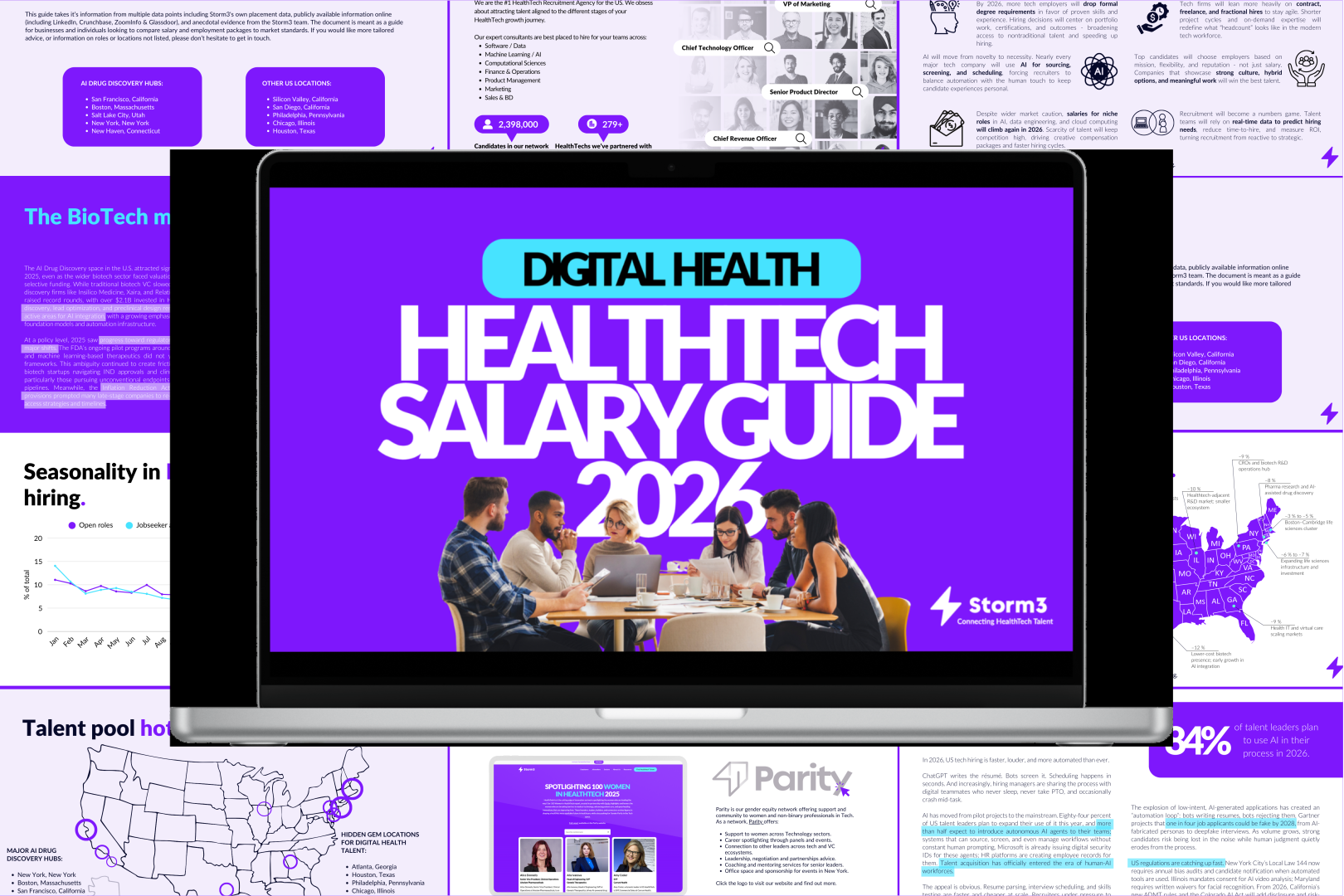
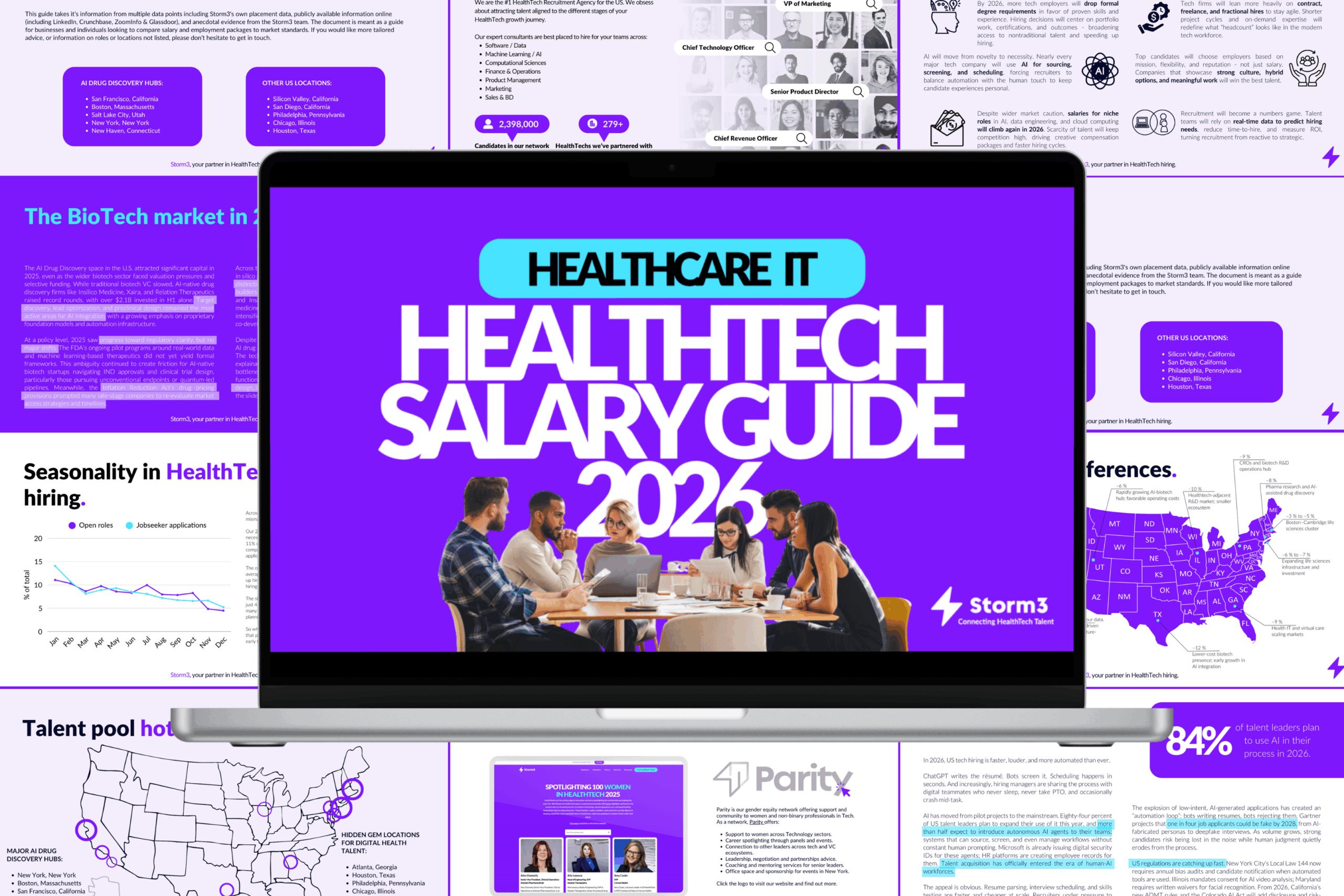
To help both employers and candidates navigate this market, we’ve released our US HealthTech Salary Guide 2026 across three core verticals:
Each guide includes detailed salary bands, equity expectations and hiring trends by function and seniority – from senior ICs to C-suite.
How We Collected The Data
All three 2026 guides use the same multi-source approach:
- Storm3’s own placement and shortlist data across HealthTech and BioTech
- Public information from platforms like LinkedIn, Crunchbase, ZoomInfo and Glassdoor
- Ongoing feedback from hundreds of searches run by Storm3’s specialist consultants in the US
Together, this gives a real-world HealthTech Salary Guide – grounded in actual offers and negotiations, not just job ads.
Key HealthTech Market Trends in 2026
1. Digital Healthcare Becomes the Default Front Door
Telehealth, remote monitoring and AI-driven triage have moved from “nice to have” to core patient entry points. Symptom checkers, intake bots and triage algorithms are increasingly the first touch in a patient journey, especially in urgent care and mental health.
Federal initiatives like the Federal Telehealth Expansion Act and CMS’ reimbursement flexibility continue to support virtual care and remote monitoring, while new scrutiny on telehealth prescribing (especially for controlled substances) is forcing companies to rework onboarding and retention models.
2. Healthcare IT Gets Modular, Not Monolithic
Hospitals and health systems are moving away from one-size-fits-all platforms:
- ONC enforcement of the 21st Century Cures Act has pushed certified vendors to support FHIR-based APIs, accelerating best-of-breed strategies.
- Providers are prioritizing interoperability, automation and revenue-cycle impact over big-bang EHR overhauls, choosing modular tools that plug into existing stacks.
For talent, that means continued demand for product managers, integration engineers and go-to-market specialists who understand messy real-world workflows.
3. AI Drug Discovery Moves From Hype to Execution
AI Drug Discovery is maturing fast:
- AI-native BioTechs like Insilico and Xaira are raising record rounds and moving toward IPO territory.
- Teams are vertically integrating wet-lab and in silico capabilities – the line between “platform” and “biotech” is blurring.
- 2026 will likely see more focus on explainability, traceability and FDA co-pilot programmes, favouring companies that design for auditability from day one.
The most in-demand hires here are hybrid profiles – computational chemists, bioinformaticians and AI pharmacologists who can translate model outputs into assays and trial endpoints.
4. Hybrid Care Beats Virtual-Only
Employers and payers now want outcomes, not just access. The most successful digital health players are building hybrid networks: virtual care wrapped around labs, clinics and home-care offerings to close the loop on diagnosis, treatment and monitoring.
This is pushing up demand (and compensation) for ops, network and clinical-operations leaders who can design and run these blended models.
Geography: Where the Talent (and the Money) Is
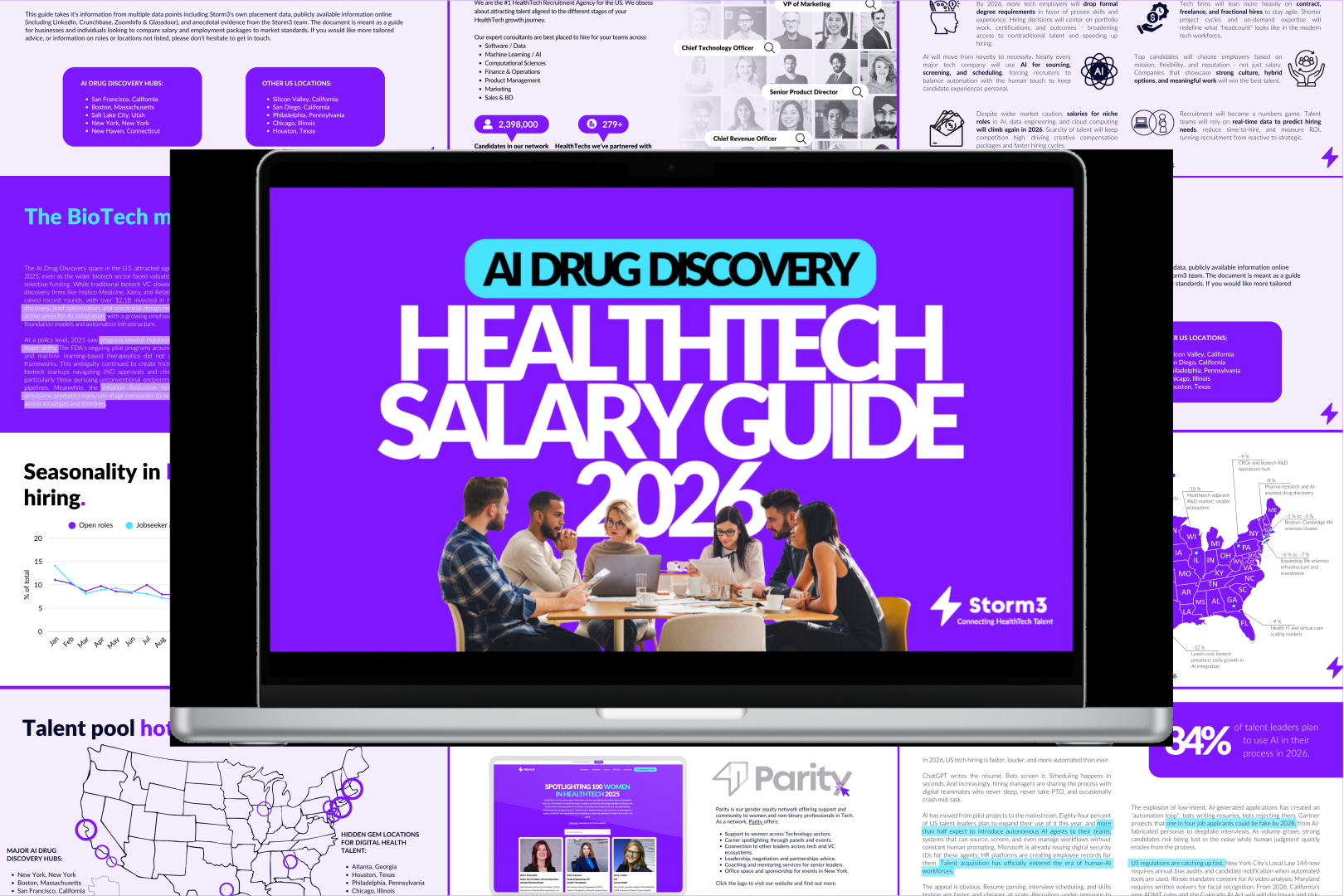
All three guides include a US map on geographical differences (around page 13), but the high-level picture:
- Digital Health: California is the baseline and highest overall, with New York and Massachusetts only a few percent behind. Texas and Midwest markets typically sit 7–12% lower but are rising as remote and hybrid teams expand.
- AI Drug Discovery: California again sets the pace, with Boston/Cambridge close behind (within 3–5% of California). Utah, New York and emerging hubs like Connecticut, Pennsylvania and Texas usually sit 7–12% below but often trade higher equity for slightly lower cash.
- Healthcare IT: Massachusetts is the baseline here, with California and Minnesota close behind, and secondary states 6–12% lower on average – often offset by lower cost of living and stronger work-life balance.
The talent-hotspot maps on page 20 of each guide show a similar pattern:
major hubs such as New York, Los Angeles, San Francisco, Boston, Chicago and DC, plus “hidden gems” like Houston, Phoenix, Detroit, Tampa, Dallas, Philadelphia, Salt Lake City and San Diego, all with median tenures around 1.8–1.9 years.
HealthTech Hiring & Recruitment Trends in 2026
1. Seasonality Still Catches Teams Out
The seasonality chart on page 17 of each guide shows how open roles and applications misalign through the year:
- January: ~14% of all applications but only 11% of job postings – candidates are moving while companies finalise budgets.
- June–September: roles climb to 8–10% of the annual total, while applications dip to 7–8%, stretching hiring timelines.
- Nov–Dec: postings drop to 4–5%, but candidate interest holds near 7%, especially among people planning a January move.
Teams that lean into January/February and early Q4 hiring windows consistently pick up better talent while competitors sit on headcount approvals.
2. AI in Recruitment: Support, Not Replacement
Across all three guides, the AI in recruitment section (pages 18–19) lands on the same message:
- 84% of US talent leaders plan to expand AI use in their hiring process in 2026.
- Regulations such as NYC Local Law 144, the California ADMT rules and the Colorado AI Act are already pushing for audits, consent and risk assessments when AI tools are used in hiring.
- Around two-thirds of US adults say they’d rather not apply for a job where AI helps make decisions, and 71% oppose AI making the final call, placing a premium on transparency and human judgment.
In other words: AI can handle volume, but humans own trust.
3. Skills-Based, Flexible, Data-Led Hiring
The recruitment-trends pages highlight a consistent set of shifts across HealthTech and BioTech:
- More employers are dropping formal degree requirements in favour of portfolios, certifications and outcomes.
- Niche roles in AI, data engineering and cloud are seeing renewed salary pressure in 2026 as scarcity keeps competition high.
- Contract, freelance and fractional hiring is rising as companies look for agility, especially in AI Drug Discovery and platform-heavy Digital Health businesses.
- Candidates are choosing roles based on mission, flexibility and reputation at least as much as pure salary.
Sector Snapshots: Inside Each 2026 Salary Guide
Digital Health
Digital Health continues to be one of the fastest-moving corners of the US healthcare ecosystem. Telemedicine, remote monitoring and AI-driven care tools are now core parts of the patient journey—not just add-ons. Major players like Teladoc, Amwell, Apple and Google are setting the bar for what virtual and hybrid care should look like, and younger companies are racing to match that experience.
Trend to watch in 2026: The rise of hybrid care models, blending virtual care with in-person diagnostics, home testing and device-powered monitoring.
AI Drug Discovery
AI Drug Discovery is quickly shifting from early-stage promise to real-world execution. Companies are using AI for everything from target identification to preclinical modelling, while the line between “AI-first platform” and “biotech company” gets blurrier every year. Partnerships between Big Pharma, CROs and AI startups are becoming a key growth engine—helping teams scale their science more efficiently.
Trend to watch in 2026: Vertical integration—AI platforms building their own wet labs and full-stack discovery engines to accelerate iteration and improve model accuracy.
Healthcare IT
Healthcare IT remains the backbone of the US healthcare system—now a $142.3bn market powered by EHR modernization, population health analytics and AI-driven decision support. As interoperability rules tighten and federal funding boosts rural telehealth infrastructure, organizations are prioritizing tools that simplify workflows and produce real ROI for clinicians.
Trend to watch in 2026: Modular IT stacks—health systems are moving away from monolithic platforms toward flexible, API-driven tools that plug neatly into existing EHRs.
The Storm3 Edge
At Storm3, we partner with HealthTech innovators across every sector – Digital Healthcare organizations building the future of patient care, to Drug Discovery teams at the bleeding edge of AI implementation Our specialized teams connect high-growth companies with the leadership and technical talent that drives results.
If your business is hiring for 2026 – whether it’s a Head of Data, Compliance Lead, or CTO – we’re here to help you benchmark, attract, and retain the people who will define HealthTech’s next era.
Frequently asked questions
Who are these Salary Guides for?
Our HealthTech Salary Guides are aimed at US Based HealthTech organizations looking to benchmark salaries & understand the HealthTech recruitment market; and HealthTech professionals looking to understand their earning potential.
Where do you get the data from?
We use a mix of data from over 20,000 candidates in the Storm3 database, as well as industry insights we gather from conversations with industry leaders, filling roles for our clients and nearly 5 years of experience.
Where can I find salary benchmarking information?
This article is a highlight of the trends and insights from within our 2026 US HealthTech Salary Guides – As salaries in HealthTech vary depending on vertical, we have created individual salary guides for three of the key HealthTech verticals we operate in, which you can find here:
What if I want to know about salary trends in specific HealthTech sectors?
Don’t fret, we’ve got you covered! If you are interested in viewing our salary guides across individual HealthTech verticals, you can find them here:
Does this guide include contract/hourly rates?
Our guides exclusively cover full-time salaried employees based on region and role.